 By
By So, What Is the Safest Way to Clean Upstairs Windows?
The safest way to clean upstairs windows is to avoid climbing ladders wherever possible and use equipment that allows the windows to be cleaned from the ground. For most homes, this means using a water fed pole system with purified water. It removes the need to work at height, reduces the risk of falls, and provides better results than many traditional cleaning methods.
In our experience, one of the biggest mistakes homeowners make is underestimating the risks involved in cleaning upstairs windows. Many people assume it is a quick weekend job, but from working with clients across Kent, we have seen countless situations where windows are difficult to reach safely because of conservatories, uneven ground, flower beds, or extensions. The safest approach is always the one that keeps your feet firmly on the ground.
Why Cleaning Upstairs Windows Can Be Risky
At first glance, cleaning an upstairs window does not seem particularly dangerous. However, statistics from the construction and maintenance sectors consistently show that falls from height remain one of the most common causes of serious injuries in the UK.
Even a relatively short fall from a ladder can result in significant injuries. What makes residential window cleaning particularly challenging is that many properties are not designed with ladder access in mind.
Common risks include:
- Uneven ground
- Wet surfaces
- Overreaching from ladders
- Obstacles such as conservatories
- Soft ground around gardens
- Strong winds
In our experience, the risk often comes from homeowners trying to stretch just a little further rather than repositioning equipment properly.
What the Health and Safety Executive Says
The Health and Safety Executive recommends avoiding working at height where it is reasonably possible to do so.
The guidance around working at height focuses on reducing risks by choosing safer methods first. For window cleaning, that usually means using equipment that allows the work to be carried out from ground level.
This is one reason why professional window cleaning has changed significantly over the last decade.
Why Water Fed Pole Systems Are Considered the Safest Option
Today, most professional window cleaners use water fed pole systems.
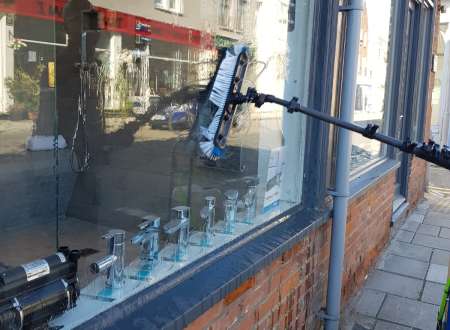
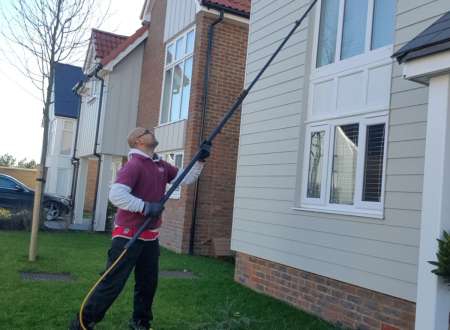
These systems allow windows to be cleaned from the ground using lightweight poles that can reach several storeys high. Purified water is pumped through the pole and used to clean the glass, frames, and sills.
In our experience, water fed poles work better than ladders because they eliminate the biggest risk altogether. Rather than managing the dangers of working at height, they remove the need to leave the ground.
This is also why most professional residential window cleaning companies now use them as their primary method.
How Purified Water Improves Safety and Results
Safety is only part of the reason these systems are popular.
Purified water contains no minerals, meaning it dries naturally without leaving marks behind. This creates a streak free finish without needing to climb up and dry the windows manually.
We have completed more than 4,000 residential cleaning visits across Kent, and we have found that purified water systems consistently produce better results on upstairs windows than traditional ladder and cloth methods.
In our experience, purified water cleaning works better than traditional bucket and squeegee cleaning because it reaches difficult areas safely while leaving less residue behind.
Are Ladders Ever Safe for Window Cleaning?
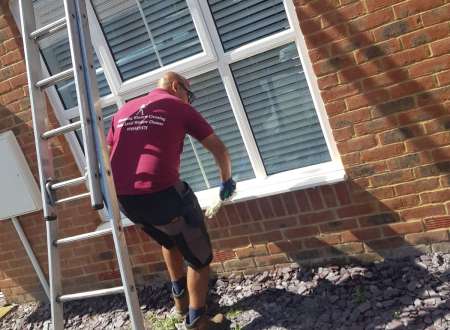
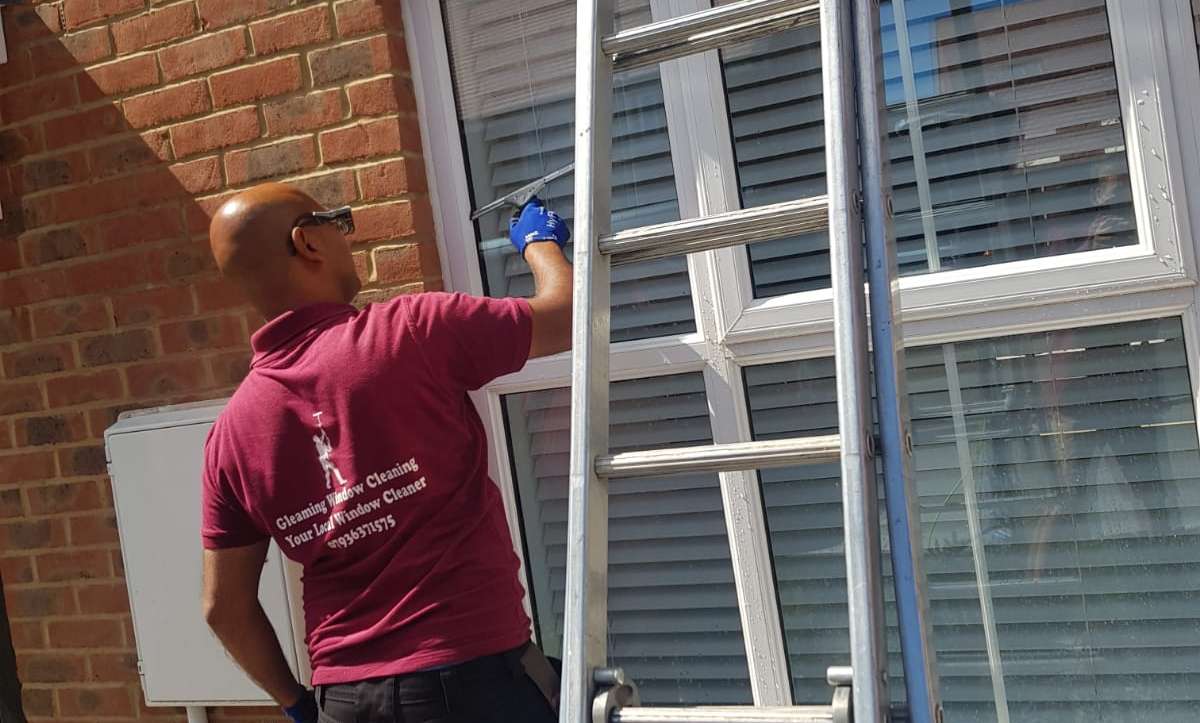
Ladders still have their place in some situations, but they should be used carefully and only when necessary.
Professional cleaners undergo training and follow strict procedures when ladders are required.
For homeowners, ladders can become risky when:
- The ground is uneven
- The ladder is not secured correctly
- The user overreaches
- Weather conditions change unexpectedly
From working with clients, we often find that many properties have features that make ladder use less safe than homeowners initially realise.
Why Conservatories Make Upstairs Windows More Difficult
One of the most common challenges we encounter is conservatories.
A conservatory directly below an upstairs window can make traditional access almost impossible. Attempting to lean a ladder against a conservatory roof can damage the structure and create serious safety risks.
In these situations, water fed pole systems provide a straightforward solution.
Many homeowners who book regular conservatory roof cleaning also use the same visits to keep difficult upstairs windows maintained safely.
Extensions and Modern Homes
Modern homes often include rear extensions, garden rooms, and roof lanterns. While these features add valuable space, they can make upstairs windows harder to reach.
From experience, extensions are one of the main reasons homeowners switch from DIY cleaning to professional services.
What looks accessible from the front of a property can be completely different at the rear.
Why DIY Window Cleaning Often Leads to Problems
Many people start cleaning their own windows to save money.
However, we have found that the challenge is rarely the actual cleaning. The biggest difficulty is access.
Common DIY problems include:
- Missing parts of the glass
- Streaks caused by tap water
- Unsafe ladder positioning
- Damage to gutters or roofline components
In our experience, the time spent setting up and moving ladders often exceeds the actual cleaning time.
How Gutters Affect Upstairs Windows
Blocked gutters are another issue that many homeowners overlook.
Even perfectly cleaned windows can quickly become dirty if overflowing gutters are running water and debris down the glass.
Regular gutter cleaning helps prevent this and keeps upper windows cleaner between visits.
From working with clients, we often find that recurring staining around upstairs windows is linked to blocked gutters rather than poor window cleaning.
What About Solar Panels?
Homes with solar panels can also experience dirt and debris washing onto nearby windows.
Dust, pollen, and bird droppings often accumulate on panel surfaces and wash down during rain.
Regular solar panel cleaning helps reduce this issue while maintaining the efficiency of the panels themselves.
How Often Should Upstairs Windows Be Cleaned?
For most homes, every six to eight weeks is usually sufficient.
Properties near busy roads, trees, or open farmland may benefit from more frequent cleaning.
We have found that customers on regular schedules experience fewer staining issues and require less intensive cleaning during each visit.
What We Have Learned From Cleaning Homes Across Kent
Having completed thousands of residential cleans across Ashford, Canterbury, Folkestone, and surrounding areas, one pattern stands out clearly.
Homeowners who try to clean upstairs windows themselves usually stop because of access rather than the cleaning itself.
The issue is not removing dirt. It is reaching the windows safely.
That is why modern equipment has become so widely adopted throughout the industry.
Seeing Professional Results
If you would like to see examples of how professional equipment is used on real properties, you can visit our Instagram page where we share recent work carried out across Kent.
You can also visit our Facebook page to see completed jobs and service updates.
Conclusion
The safest way to clean upstairs windows is to use equipment that allows the work to be carried out from the ground. For most properties, water fed pole systems offer the safest and most effective solution because they remove the need to work at height while providing excellent cleaning results.
In our experience, water fed poles work better than ladders because they reduce risk, improve access, and create a more consistent finish. Having completed over 4,000 residential cleaning visits across Kent, we have found that professional ground based cleaning methods provide the safest and most reliable approach for maintaining upstairs windows.
At Gleaming Window Cleaning, we help homeowners across Kent keep their upstairs windows clean safely, efficiently, and without the risks associated with traditional ladder work.